
Holistic healing workshops need thoughtful design that balances educational content with experiential learning. These sessions differ from traditional training because they address the interconnected nature of physical, mental, emotional, and spiritual wellbeing.
The most effective holistic healing workshops combine structured curriculum elements with interactive engagement techniques. These allow participants to directly experience the practices being taught.

Creating workshops in this field presents unique challenges. You need to convey both theoretical knowledge and practical skills while maintaining a safe, supportive environment.
Designing workshops that engage requires understanding how adults learn and what motivates them to participate actively. The format you choose impacts whether participants leave with actionable skills or only surface-level awareness.
Your workshop’s success depends on three core elements. You need a well-organized curriculum that builds knowledge progressively, a format that suits your content and audience, and engagement techniques that keep participants actively involved.
Active engagement ensures attendees can apply what they learn to their own healing journeys or professional practice.
Key Takeaways
- Effective holistic healing workshops integrate structured curriculum with hands-on experiential learning activities.
- Workshop format selection must align with your content depth, audience size, and learning objectives.
- Active participant engagement through varied techniques ensures knowledge retention and practical skill development.
Understanding the Basics of Workshop Design
Effective workshop design in holistic healing starts with clear objectives aligned with participant needs. You should create structured activities that promote experiential learning.
The foundation rests on understanding how design choices directly impact participant transformation. Your choices affect how well participants retain healing practices.
The Importance of Workshop Design in Holistic Practices
Workshop design determines whether participants simply attend or actually transform their healing practice. A well-structured workshop creates an environment where you can facilitate deep learning experiences.
Designing workshops that engage requires you to consider how each element contributes to participant outcomes. In holistic healing contexts, poor design can leave attendees confused about how to apply techniques.
The design phase is where you align your healing expertise with participant readiness levels. Your design choices influence whether participants feel safe enough to engage with vulnerable healing processes.
Energy healing workshop design can set you apart as a leader by cultivating meaningful connections with your audience. The structure you create either supports or hinders the healing work you intend to facilitate.
Key Principles of Effective Workshop Design
SMART objectives form the backbone of impactful workshop design. You need objectives that are Specific, Measurable, Achievable, Relevant, and Time-bound to guide your content and assessment strategies.
Active participation is essential throughout your workshop. You should incorporate varied techniques including small group discussions, hands-on activities, and collaborative exercises.
Experiential learning methods allow participants to practice healing techniques rather than just hear about them. Workshops designed for active learning encourage experiential engagement and use varied activities to meet diverse learner needs.
Your workshop structure should include clear segments with defined purposes. This helps you maintain momentum and ensures participants understand how each activity builds toward mastery of holistic healing practices.
Structuring the Curriculum
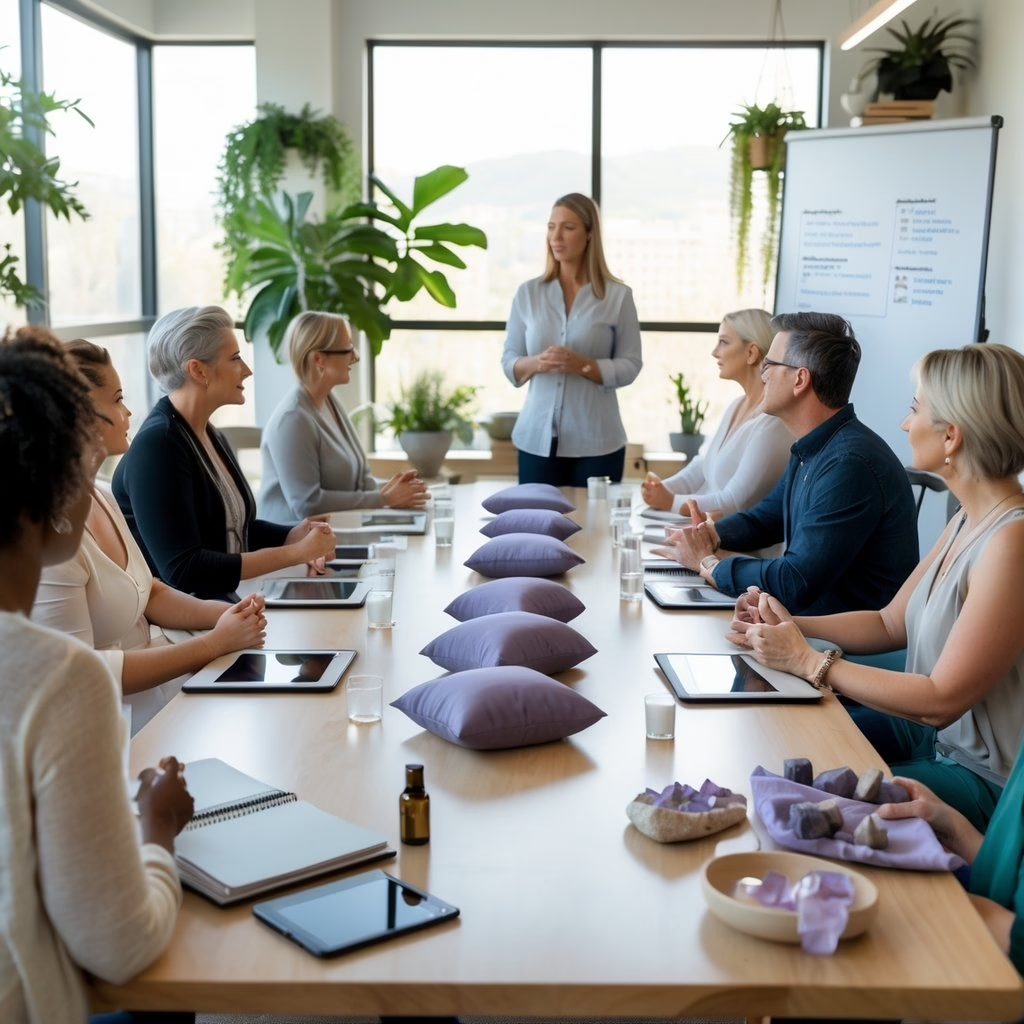
A well-structured curriculum establishes clear learning pathways. It also creates space for participants to embody holistic healing practices through direct experience.
The foundation requires identifying specific learning objectives. You need to balance theoretical knowledge with practical application and design hands-on activities that deepen skill development.
Identifying Core Topics and Learning Objectives
You need to define what participants will know and be able to do by the end of your workshop. Start by listing the essential healing modalities, theoretical frameworks, and practical skills that align with your workshop’s purpose.
Effective workshop planning requires SMART objectives that are specific, measurable, achievable, relevant, and time-bound. For a Reiki workshop, your objectives might include “demonstrate proper hand positioning for self-healing” or “explain the five Reiki principles and their applications.”
Break complex topics into smaller learning units that build progressively. Your core topics might include:
- Foundational concepts: Energy anatomy, chakra systems, or meridian pathways
- Assessment techniques: Intake procedures, contraindications, or client evaluation methods
- Practical applications: Hands-on healing protocols, session sequencing, or integration strategies
- Professional considerations: Ethics, boundaries, or self-care practices
Document each objective clearly so participants understand what they will gain from each segment.
Balancing Educational Content with Experiential Learning
You should allocate about 30-40% of workshop time to instruction and 60-70% to experiential practice. Holistic healing workshops fail when they rely too much on lectures without giving participants time to integrate concepts through direct experience.
Structure your curriculum so theoretical presentations directly precede related practice sessions. When teaching breathwork techniques, spend 15 minutes explaining the physiology and contraindications, then allocate 30-45 minutes for guided practice and reflection.
Understanding learner needs helps you design content that remains engaging and relevant. Alternate between different learning modalities every 20-30 minutes to maintain engagement and accommodate various learning styles.
Include periods for silent practice, group discussion, and individual reflection. This rhythm prevents cognitive overload and allows participants to process information at multiple levels.
Incorporating Hands-On Activities and Practice Sessions
You must design practice sessions that mirror real-world application of healing techniques. Create structured activities where participants work in pairs or small groups to practice specific protocols under your guidance.
Design practice sessions with clear instructions, defined time limits, and specific objectives. For a sound healing workshop, you might structure a 40-minute activity where participants take turns as practitioner and receiver, with time for feedback and discussion.
Workshops that engage participants incorporate varied hands-on formats:
- Guided demonstrations: You perform the technique while participants observe specific details.
- Simultaneous practice: Everyone practices the same technique at the same time with your guidance.
- Rotational stations: Small groups move through different practice areas focusing on specific skills.
- Case study applications: Participants apply multiple techniques to address hypothetical client scenarios.
Build in time for participants to make mistakes and receive corrective feedback. Schedule practice sessions that increase in complexity, starting with basic techniques on themselves before progressing to partner work.
Selecting the Appropriate Format

The format you choose directly affects participant engagement, accessibility, and the depth of healing work possible in your workshop. Your audience’s needs, the specific modalities you teach, and practical considerations all influence which structure will serve your goals best.
Determining the Best Format for Your Audience
You need to assess your target participants’ preferences, schedules, and comfort levels before selecting a format. Consider whether your audience consists of beginners seeking introductory experiences or advanced practitioners wanting intensive skill development.
Geographic distribution plays a significant role in format selection. If your audience spans multiple regions or countries, online formats increase accessibility.
Local communities often benefit from in-person gatherings that build stronger interpersonal connections. Time availability varies across demographics.
Working professionals might prefer weekend intensives or evening sessions spread over several weeks. Stay-at-home parents may need shorter daytime sessions that accommodate childcare schedules.
Budget constraints affect format choices since in-person workshops require venue rentals and travel costs. Online formats reduce overhead expenses, allowing you to offer lower pricing or invest more in content development.
Comparing In-Person vs. Online Workshops
In-person workshops excel at creating transformational group experiences. Direct human connection and hands-on practice allow you to demonstrate techniques and respond immediately to non-verbal cues.
In-Person Advantages:
- Direct energy exchange between facilitator and participants
- Hands-on adjustments and personalized guidance
- Stronger community bonding and peer support
- Fewer technical distractions
Online Advantages:
- Broader geographic reach and larger potential audience
- Lower costs for both facilitator and participants
- Flexibility for recorded content and replay access
- Comfortable home environment for vulnerable work
Online workshops require different engagement strategies but can still facilitate meaningful healing. You can use breakout rooms for small group exercises, visual aids for demonstrations, and chat features for questions.
Hybrid models combine both approaches by offering core content online with optional in-person intensives. This format accommodates varied preferences while maintaining accessibility.
Adapting Formats to Different Holistic Modalities
Some healing modalities naturally align with specific formats based on their requirements. Energy healing practices like Reiki or sound therapy translate well to both settings, though in-person sessions allow direct transmission.
Bodywork modalities such as massage therapy, craniosacral work, or myofascial release require in-person formats for proper instruction. You can teach theory and anatomy online, but hands-on practice demands physical presence.
Format Alignment by Modality:
| Modality Type | Best Format | Alternative Option |
|---|---|---|
| Meditation & Breathwork | Either | Hybrid with guided recordings |
| Herbal Medicine | In-person for preparation | Online for theory |
| Movement Practices | In-person preferred | Online with clear camera angles |
| Spiritual Counseling | Either | One-on-one virtual sessions |
Contemplative practices like meditation, journaling, or visualization work effectively in online environments. Participants can practice in their personal spaces, which sometimes deepens the experience.
Workshops incorporating nature elements or specific environmental settings require in-person formats. Forest bathing, plant identification walks, or earth-based rituals depend on outdoor access and direct environmental engagement.
Engagement Techniques for Holistic Workshops

Successful holistic healing workshops rely on specific methods that promote safety. They build authentic relationships among participants and ensure practical knowledge transfers into daily practice.
Creating an Inclusive and Interactive Environment
You need to establish psychological safety from the moment participants enter your workshop space. Begin with a clear welcome that acknowledges diverse backgrounds, experience levels, and healing journeys.
Set explicit ground rules about confidentiality, respect, and voluntary participation. Emphasize that no one must share beyond their comfort level.
Create physical arrangements that promote equality, such as circles rather than rows, which eliminate hierarchical positioning. Use accessibility checks to ensure your space works for different mobility needs, sensory sensitivities, and learning styles.
Provide multiple ways for participants to engage, including verbal sharing, written reflections, and silent observation. Offer fidget tools, varied seating options, and breaks that allow for movement or stillness.
Build in regular consent practices throughout your workshop. Ask permission before introducing intense exercises or physical contact.
Model vulnerability appropriately while maintaining professional boundaries. This encourages participants to engage authentically without feeling pressured to overshare.
Techniques for Fostering Participant Connection
Pair work creates low-pressure opportunities for sharing before larger group discussions. Structure dyad exercises where participants take turns speaking and listening without interruption to quickly build trust.
Small group activities of three to five people allow for deeper exploration of healing practices while maintaining intimacy. Rotate group compositions throughout your workshop so participants connect with multiple people instead of staying in familiar clusters.
Use structured sharing prompts instead of open-ended questions. Ask specific questions like “What brought you to this practice?” or “When do you feel most grounded?” to generate meaningful responses.
Create collaborative learning moments where participants teach each other techniques or insights. Position attendees as resources, which validates their knowledge and builds community investment in collective learning.
Methods for Enhancing Skill Retention
Dedicate most of your workshop time to hands-on practice, not lectures. Demonstrate a technique once, then guide participants through their own practice with real-time coaching.
Have participants practice the same core skill in different contexts or with different partners. This approach strengthens learning and keeps sessions engaging.
Key retention strategies include:
- Practice journals for recording immediate experiences and steps
- Teach-back moments where attendees explain techniques to partners
- Take-home resources with visual guides or audio recordings
- Action commitments where participants identify a specific way they’ll apply learning within 48 hours
Build in reflection intervals using short quizzes or prompts. Use brief written exercises, partner discussions, or silent contemplation based on your group’s preferences.
Schedule follow-up touchpoints such as email check-ins or optional online gatherings. These connections reinforce learning and provide accountability for integrating practices into daily life.
Practical Tips for Workshop Implementation
Successful workshop execution requires attention to operational details and strategic outreach to your ideal participants. Systematic collection of insights informs future offerings.
Logistics and Planning Considerations
Book your venue at least 6-8 weeks in advance. Ensure the space accommodates your anticipated group size plus 20% buffer capacity.
Verify the room has natural lighting, temperature controls, and nearby restrooms. Create a detailed supply checklist organized by category: materials for activities, technology needs, comfort items like cushions or blankets, and backup supplies.
Purchase consumables in quantities 15% higher than your registration count to account for last-minute additions or damaged items. Develop a minute-by-minute timeline that includes setup, activity transitions, and breaks every 60-90 minutes.
Building interactive workshop activities requires precise time management. Confirm all technology 48 hours before the event and test equipment at the actual venue during your scheduled time.
Prepare participant packets with handouts, worksheets, and take-home resources. Include a welcome letter with your contact information and post-workshop support details.
Marketing Your Workshop to Attract Participants
Define your target audience by demographics, challenges, and healing goals. Write workshop descriptions that address their pain points and desired outcomes.
Share authentic testimonials from previous participants that describe specific transformations. Include the person’s first name and general location to build credibility.
Distribute promotional content 4-6 weeks before your workshop date. Post on social media, send email announcements, and partner with complementary practitioners for cross-promotion.
Offer early-bird pricing that expires 2-3 weeks before the event. Consider providing a limited number of sliding-scale spots for participants with financial constraints.
Create visually appealing graphics with essential information: workshop title, date, time, location, and registration link. Use calming colors and imagery that reflect your holistic approach.
Gathering and Utilizing Participant Feedback
Distribute feedback forms immediately at the end of the workshop while experiences remain fresh. Use rating scales for quantitative data and open-ended questions for qualitative insights.
Ask about pacing, activity effectiveness, venue comfort, and perceived value. Include questions like: “What was the most valuable part of this workshop?” and “What would you change or improve?”
Send a follow-up email 7-10 days post-workshop requesting additional reflections. This delayed feedback often reveals deeper impacts.
Review all feedback within one week and identify recurring themes or suggestions. Track common praise points and improvement areas in a simple spreadsheet.
Implement at least one significant change based on participant input for your next offering. Communicate these improvements in your marketing materials to show responsiveness.
Case Studies and Examples
Real-world applications show how holistic healing workshops achieve measurable outcomes through specific design choices and facilitation methods. Examining successful models and practitioner insights reveals practical strategies for your own workshop development.
Successful Workshop Models in Holistic Practices
Holistic pain management interventions use multi-modal approaches to create effective learning environments. One case combined acupuncture, massage therapy, and guided imagery training in a single workshop, teaching participants to address chronic pain through complementary methods.
Stroke recovery programs focusing on neuroplasticity use mindfulness and visualization techniques. These workshops structure sessions around progressive skill-building, allowing participants to practice mental exercises that support physical rehabilitation.
Interactive workshops using role-playing and group projects work well when tailored to local contexts. Incorporate culturally relevant examples and leverage regional expertise to ensure your content resonates with participants’ experiences.
Wellness education workshops that teach practical skills like herbal remedies or breathwork achieve higher engagement with hands-on practice sessions. Breaking complex topics into digestible components with immediate application opportunities helps participants retain information and build confidence.
Lessons Learned from Experienced Practitioners
Successful facilitators focus on restorative approaches in healing-focused workshops. Use affective statements and guided reflection techniques to establish trust and psychological safety.
Effective engagement techniques include daily tips and short quizzes that reinforce content between sessions. These touchpoints maintain momentum and encourage participants to integrate practices into daily routines.
Experienced practitioners tailor workshop design to specific audiences for better outcomes. Assess participants’ prior knowledge, cultural backgrounds, and learning preferences before finalizing your curriculum.
The most impactful workshops balance educational content with experiential learning. Allocate 60-70% of session time to hands-on practice instead of lectures to help participants develop embodied understanding of holistic techniques.
Frequently Asked Questions
Effective holistic healing workshops require careful curriculum design, participant engagement strategies, and supportive learning environments. The following questions address practical considerations for workshop designers seeking to maximize impact and participant outcomes.
What are the key components of an effective holistic healing workshop curriculum?
An effective holistic healing workshop curriculum includes clear learning objectives. Participants should know what they will achieve by the end of the session.
Incorporate experiential activities that let participants practice techniques instead of only observing demonstrations. A step-by-step approach to designing workshops ensures your curriculum flows logically from foundational concepts to advanced applications.
Balance theoretical knowledge with hands-on practice time. Include assessment checkpoints to verify participant understanding before moving to new topics.
Provide take-home materials that reinforce workshop concepts and support continued practice. The curriculum should address physical, emotional, mental, and spiritual aspects of healing.
Integrate cultural sensitivity and awareness of diverse healing traditions to strengthen relevance for varied participant backgrounds.
How do I tailor workshop content to accommodate different learning styles for maximum engagement?
Incorporate visual elements like diagrams, videos, and demonstration models for visual learners. Auditory learners benefit from verbal explanations, group discussions, and guided meditations.
Kinesthetic learners need hands-on practice opportunities. Dedicate at least 40-60% of workshop time to active participation.
Provide written handouts and reference materials for those who prefer reading. Offer pre-workshop materials so participants can familiarize themselves with concepts at their own pace.
Creating engaging workshop activities means designing experiences for multiple learning preferences. Rotate between activity types every 15-20 minutes to maintain attention.
Offer optional breakout sessions or parallel tracks so participants can choose activities aligned with their preferred learning methods. Give participants some autonomy over their learning path to maintain engagement.
What are the best practices for structuring a workshop to ensure participant interaction and positive experience?
Begin with an icebreaker to help participants feel comfortable and establish psychological safety. Introduce ground rules collaboratively, asking participants to contribute guidelines for respectful interaction.
Structure your workshop in 60-90 minute segments with 10-15 minute breaks to prevent overload. Each segment should include instruction, demonstration, practice time, and reflection.
Build in partner work and small group discussions before large group sharing. This approach reduces anxiety and allows people to test ideas in lower-stakes settings.
Designing impactful sessions requires intentional agenda building. Progress from simple to complex skills so participants build confidence gradually.
Create opportunities for peer-to-peer learning where participants share experiences and insights. Acknowledge that participants bring valuable knowledge to the learning environment.
End each major section with a brief integration period for reflection and application. This consolidates learning and increases the likelihood of post-workshop implementation.
Can you suggest innovative techniques to measure the success of a holistic healing workshop?
Use pre and post-workshop surveys to assess knowledge, confidence, and self-reported wellness metrics. Include questions about specific skills or concepts to measure learning outcomes.
Try a retrospective pre-assessment, where participants rate their abilities before and after the workshop on the same survey at the end. This method accounts for initial lack of awareness.
Collect qualitative feedback through open-ended questions about the most valuable aspects and areas for improvement. Ask participants to describe moments when they experienced shifts in understanding or perspective.
Implement follow-up assessments at 30, 60, and 90 days after the workshop to measure behavioral changes and continued practice. These delayed measurements reveal whether content led to sustained lifestyle modifications.
Track participation metrics during the workshop, such as engagement levels, question frequency, and voluntary participation in activities. Observe body language and energy levels for real-time indicators of engagement.
Request video testimonials or written case studies from participants who implement workshop techniques successfully. These narratives provide rich evidence of workshop impact beyond numerical ratings.
How can technology be integrated into holistic healing workshops to enhance the learning experience?
You can use interactive polling apps to gather real-time feedback. Adjust pacing based on participant comprehension.
Digital platforms allow anonymous question submission. This encourages participants who might not speak up publicly to engage.
Provide QR codes that link to supplementary videos, guided practices, or reading materials. Participants can access these resources on their devices.
Extend learning beyond workshop hours without requiring physical handouts. Participants can review materials at their convenience.
Record demonstration portions of the workshop and share access links. Participants can review techniques at home.
This approach supports those who need multiple exposures to master skills. It makes learning more accessible.
Use virtual breakout rooms for hybrid or online workshops to facilitate small group discussions. Maintain intimacy and interaction even when participants join remotely.
Integrate meditation apps or biofeedback devices that help participants track their physiological responses during relaxation exercises. Tangible data helps participants understand the measurable effects of healing practices.
Create private online communities or forums where workshop participants can continue discussions. Participants can support each other after the session ends.
Build sustained engagement that extends the workshop’s impact over time. This ongoing support enhances the overall learning experience.
What are some effective methods for creating a safe and inclusive environment in a holistic healing workshop?
Clearly communicate that sharing personal experiences is voluntary, not mandatory. Explicitly state that participants can pass on any activity without explanation or judgment.
Use inclusive language that avoids assumptions about backgrounds, belief systems, or physical abilities. Offer modifications for physical practices and acknowledge multiple spiritual traditions without privileging any single approach.
Healing centered practices recognize how trauma affects participants both collectively and individually. Give appropriate warnings about potentially triggering content to create a sense of safety.
Arrange seating in circles or semi-circles instead of rows to foster connection and equality. This physical setup signals that all voices hold equal value.
Address power dynamics openly by positioning yourself as a facilitator of learning, not the sole authority. Encourage authentic participation from everyone.