
Practitioners today face a critical decision when choosing professional development opportunities. Should they invest time and resources in traditional in-person conferences or opt for the flexibility of virtual events?
This choice directly impacts their learning outcomes, networking capabilities, skill development, and work-life balance.
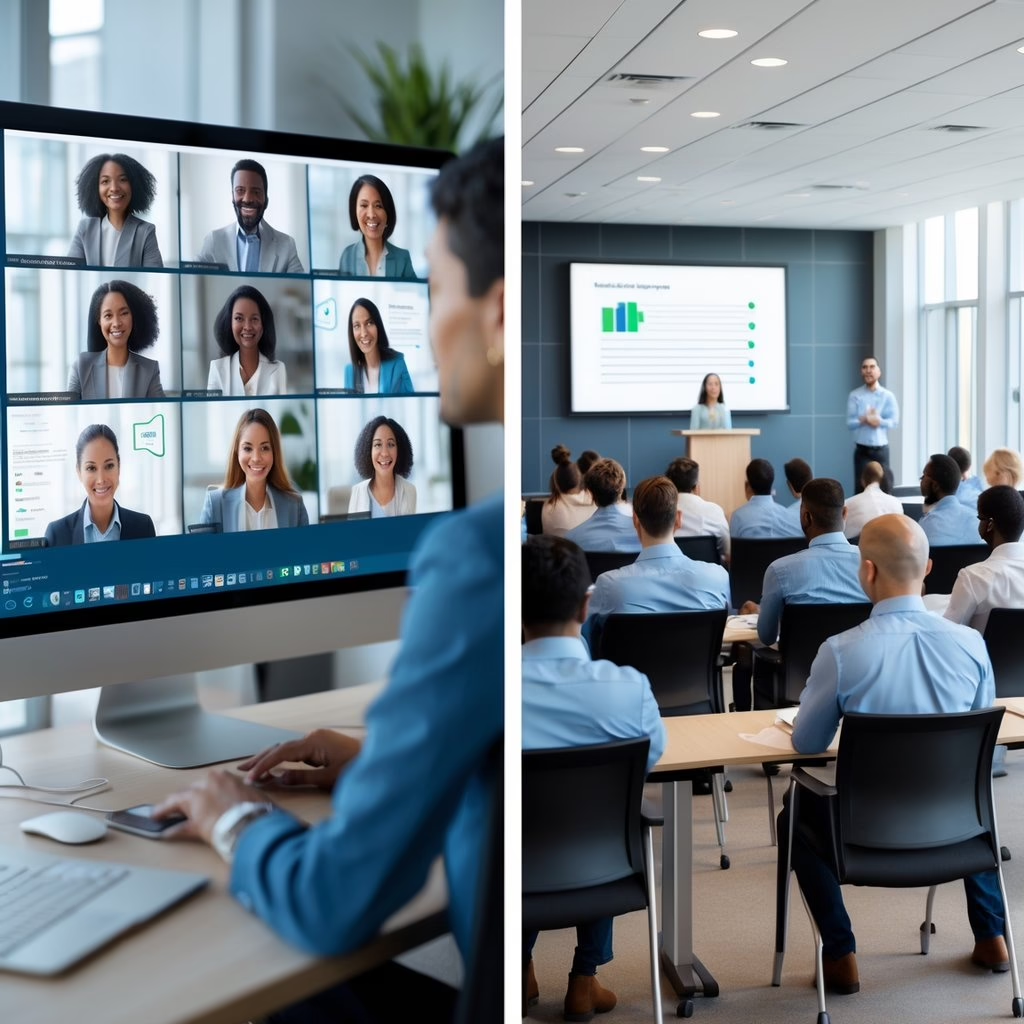
Each format presents distinct advantages that align with different professional needs and circumstances.
Understanding which conference format delivers the best learning experience requires examining factors beyond simple convenience. You need to consider how networking opportunities differ between formats, the depth of skill acquisition possible in each setting, and how these events fit within your existing professional commitments.
The decision shapes your ability to implement new techniques, build meaningful professional relationships, and advance your practice.
Key Takeaways
- Your choice between virtual and in-person conferences should align with whether you prioritize hands-on training or flexible scheduling.
- In-person events provide stronger networking and relationship-building opportunities that translate to long-term professional connections.
- Virtual conferences offer significant cost savings and accessibility while sacrificing some interactive learning experiences.
Understanding The Needs Of Holistic Practitioners
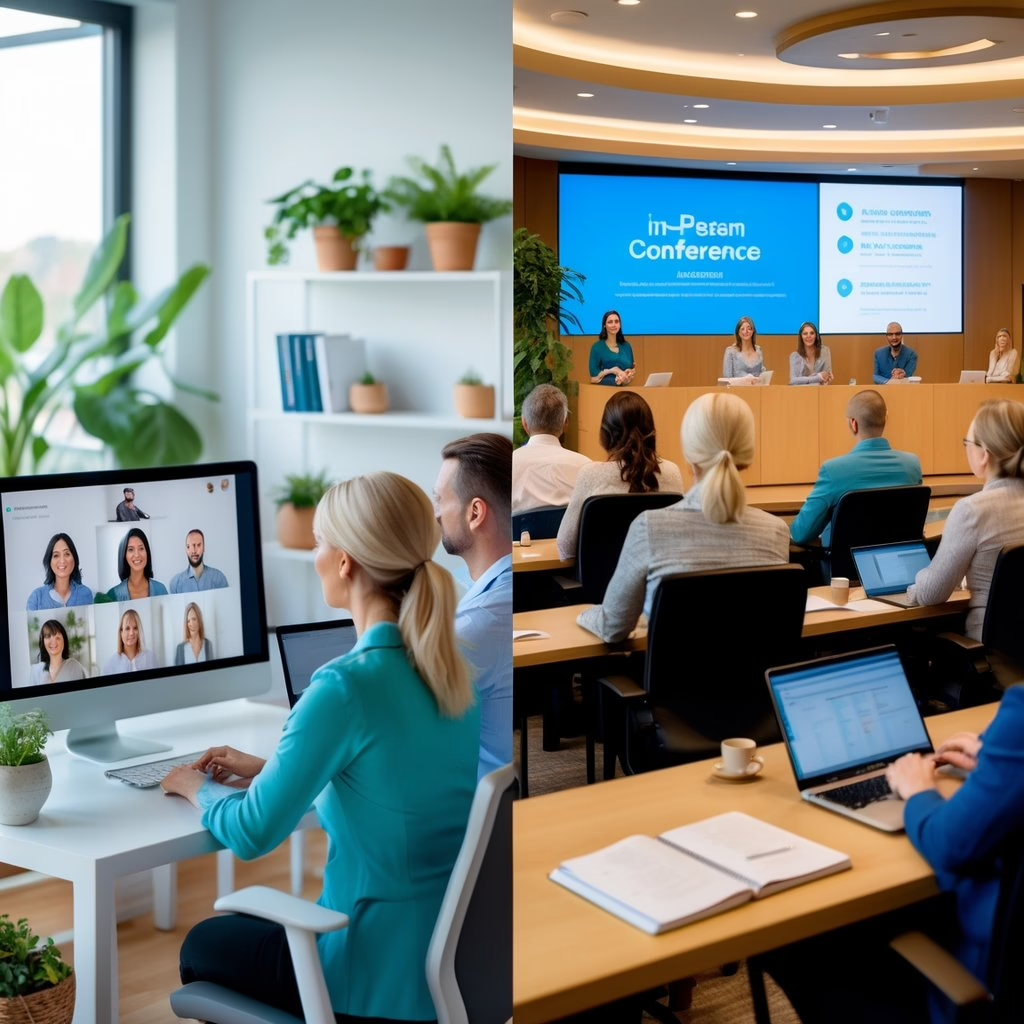
Holistic practitioners require continuous learning to maintain certifications, expand their modalities, and build sustainable businesses. They navigate an industry with inconsistent standards and isolated practice environments.
Common Professional Development Goals
You need to maintain multiple certifications that often require continuing education credits across various modalities. Most holistic practitioners work toward expanding their service offerings by learning complementary techniques such as energy healing, nutritional counseling, or bodywork approaches.
Building business skills ranks as a critical development area. You must learn marketing strategies, client retention methods, and practice management systems that traditional healthcare training doesn’t cover.
Attending conferences and networking events helps practitioners stay inspired and grow their practices through business-focused gatherings.
Your professional development also includes staying current with research that validates holistic approaches. You need evidence-based information to communicate effectively with clients and collaborate with conventional healthcare providers.
Key Development Areas:
- Certification renewals and continuing education credits
- New modality training and technique refinement
- Business and marketing skill development
- Research literacy and evidence-based practice knowledge
Unique Challenges In Holistic Practices
You often work in isolation without the built-in peer support that hospital or clinic settings provide. This isolation makes professional connections and knowledge sharing more difficult to access regularly.
The holistic field faces inconsistent quality standards and unclear guidelines across different practices. You must navigate varying certification requirements and determine which training programs offer legitimate, high-quality education.
Your practice model typically operates outside insurance systems, requiring you to handle all business operations independently. Online communities are becoming increasingly vital for connecting with peers and sharing knowledge as technology reshapes collaboration.
You also face skepticism from conventional healthcare providers, making interdisciplinary collaboration more challenging. Finding opportunities to bridge this gap requires networking and education focused on integration rather than separation from mainstream medicine.
Networking Opportunities

Professional connections formed at conferences often prove as valuable as the educational content itself. The format you choose significantly impacts the quantity, quality, and longevity of these professional relationships.
Benefits Of Networking At In-Person Conferences
Face-to-face interactions at conferences create immediate rapport that’s difficult to replicate digitally. You can read body language, engage in spontaneous conversations during breaks, and build trust through casual encounters at coffee stations or meals.
In-person networking relies on personal interactions at business events, conferences, and seminars. These settings allow you to exchange business cards, schedule impromptu meetings, and continue conversations beyond scheduled sessions.
Research from Professor Daniel Abrams shows that in-person conferences foster community building and collaboration in ways virtual formats cannot match. You benefit from serendipitous encounters that lead to unexpected partnerships or mentorship opportunities.
The physical presence at events also reinforces your commitment to professional development. Colleagues remember meeting you in person more vividly than a virtual interaction.
Virtual Networking: Tools And Effectiveness
Virtual platforms provide structured networking through chat features, breakout rooms, and one-on-one video calls. You can connect with practitioners across the globe without travel costs or time constraints.
Digital tools enable you to:
- Schedule targeted meetings with specific attendees before the event
- Access attendee directories with searchable profiles and interests
- Use AI-powered matchmaking to find relevant connections
- Continue conversations through platform messaging after sessions end
Virtual executive networking offers convenience and broader reach. You can attend multiple sessions and networking events on the same day without geographical limitations.
The challenge lies in creating meaningful dialogue through screens. You miss informal hallway conversations and the energy of crowded networking receptions.
Comparing Networking Outcomes
In-person conferences typically yield deeper initial connections but reach fewer people. You might have substantial conversations with 10-15 professionals and invest significant time in each interaction.
Virtual formats allow you to connect with 30-50 attendees through brief introductions and follow-up messages. The breadth increases while individual interaction depth often decreases.
Combining virtual and in-person networking strategies delivers optimal results for building professional relationships in 2025. Hybrid events extend your reach to a global audience while maintaining face-to-face connections with local practitioners.
Your networking success depends more on intentional follow-up than format alone. Virtual connections require deliberate effort to maintain, while in-person meetings create stronger initial bonds that may fade without continued contact.
Learning Retention

Retention rates differ significantly between conference formats based on environmental factors, engagement mechanisms, and delivery methods. In-person settings support retention through direct social interaction and fewer distractions, while virtual formats offer recording access and flexible review options.
In-Person Learning Environments
Physical conference spaces create conditions that support memory formation through multiple sensory inputs. When you attend sessions in person, you process information through visual, auditory, and spatial channels simultaneously.
In-person learning maintains advantages for knowledge retention because you engage with content in an immersive environment. The physical presence of speakers and other attendees reduces competing stimuli that fragment attention during virtual sessions.
Face-to-face interactions after presentations reinforce learning through immediate discussion and clarification. You can ask follow-up questions in hallway conversations or networking breaks that solidify your understanding of complex topics.
The structured schedule of in-person conferences eliminates multitasking temptations. You remain in dedicated learning spaces without access to work emails, household responsibilities, or other digital distractions that interfere with information processing.
Virtual Learning Tools And Techniques
Virtual conferences provide retention-supporting features that physical events cannot match. You gain access to session recordings that allow repeated viewing of challenging material at your own pace.
Digital platforms often include interactive polling, chat functions, and breakout rooms that maintain engagement during presentations. These tools let you participate actively even when attending remotely.
Note-taking applications integrate directly with many virtual conference platforms. You can timestamp notes to specific presentation moments and quickly reference relevant sections during later review.
However, virtual learning environments present retention challenges due to screen fatigue and environmental distractions. Your home or office setting lacks the dedicated focus that physical conference venues provide.
The flexibility of virtual attendance becomes a drawback when you attempt to balance conference participation with other responsibilities. Divided attention reduces the depth of information processing necessary for long-term retention.
Studies On Learning Retention In Different Formats
Research on conference format effectiveness shows mixed results depending on content type and participant engagement levels. Medical education studies indicate that virtual grand rounds can support learning communities when designed with interactive elements.
Retention rates in virtual settings improve when sessions include active learning components rather than passive watching. You retain information better from webinars that incorporate quizzes, case discussions, or live demonstrations compared to lecture-only formats.
Data from corporate training programs shows that blended approaches combining both formats often outperform either method alone. You benefit from the initial immersive experience of in-person sessions followed by virtual reinforcement materials.
Retention depends heavily on post-conference engagement regardless of format. Virtual recordings support spaced repetition learning when you revisit content weeks after the initial presentation.
Cost Effectiveness
In-person conferences typically require expenses between $1,000 to $3,000 per attendee when accounting for registration, travel, and lodging. Virtual conferences average $50 to $500 per registration.
Your choice between formats depends on your budget constraints and the value you place on different learning outcomes.
Analyzing The Costs Of In-Person Conferences
Registration fees for in-person conferences range from $300 to $1,500 depending on the event’s prestige and duration. You’ll also need to budget for airfare, which can cost $200 to $800 for domestic travel or $500 to $2,000 for international trips.
Hotel accommodations add $150 to $300 per night, and multi-day conferences require three to five nights on average. Meals not included in registration fees typically cost $50 to $100 daily.
Ground transportation, parking, and incidental expenses add another $100 to $200 to your total. Your employer may cover these costs, but attending multiple conferences annually becomes expensive.
Time away from work represents an additional hidden cost, as you’ll spend one to two days traveling plus the conference duration itself.
Virtual Conference Expenses
Virtual conference registration fees typically cost $50 to $500, making them significantly more affordable than in-person alternatives. Many organizations offer tiered pricing, with basic access starting at $100 and premium packages including recorded sessions reaching $300 to $500.
You’ll need reliable internet and basic technology, though most practitioners already own suitable devices. Some virtual platforms feature exhibit halls and interactive sessions that enhance learning without additional fees.
Your only other expense involves time away from your desk, which you can minimize by attending sessions selectively. The elimination of travel costs makes it feasible to attend multiple virtual conferences throughout the year.
You can access specialized content from international experts without geographic or financial barriers limiting your professional development.
Cost-Benefit Analysis For Practitioners
Virtual events excel in cost-effectiveness and scalability, allowing you to access five to ten times more educational opportunities for the same budget. If your primary goal is knowledge acquisition and you work with limited funds, virtual formats deliver better return on investment.
In-person conferences justify their higher costs through networking opportunities and immersive learning experiences. You’ll form stronger professional connections and engage more deeply with complex material through hands-on workshops and face-to-face discussions.
Your decision should weigh immediate costs against long-term career benefits. Virtual conferences suit routine skill updates and broad knowledge gathering, while in-person events make sense for critical professional milestones, specialized training requiring hands-on practice, or situations where networking directly impacts your career advancement.
Accessibility And Convenience
Conference format directly impacts who can attend and how easily practitioners can participate. Virtual events remove travel requirements and offer schedule flexibility, while in-person gatherings demand physical presence and time commitments that may exclude certain professionals.
Geographic And Time Accessibility Of In-Person Conferences
In-person conferences require travel to a specific location, which creates barriers based on where you live and work. If you practice in a rural area or different country, you face higher costs for flights, accommodations, and meals that can exceed registration fees.
Time commitment extends beyond the conference itself. You need to account for travel days, which typically adds two to four days away from your practice or workplace.
This absence means arranging coverage, rescheduling clients or patients, and managing workload before and after the event. Practitioners with family responsibilities, physical disabilities, or budget limitations often cannot justify the full investment required for multi-day travel.
The Flexibility Of Virtual Conferences
Virtual conferences let you attend from your office, home, or any location with internet access. You eliminate travel costs entirely and can participate in sessions between patient appointments or work commitments.
You typically pay reduced registration fees and can access recorded sessions later if scheduling conflicts arise during live presentations. The format allows you to join international conferences without passport requirements or time zone challenges affecting your entire day.
You can watch morning sessions from one conference and afternoon sessions from another. This flexibility helps you maximize learning opportunities within your existing schedule.
Evaluating Accessibility For Diverse Practitioner Needs
Your accessibility needs vary based on practice type, career stage, and personal circumstances. Early-career practitioners often have limited professional development budgets that make virtual options more feasible.
Those with mobility challenges or chronic health conditions find virtual attendance removes physical barriers present at convention centers. Practitioners in specialized fields may find virtual formats expand access to niche topics with smaller audiences.
Your technology access and digital literacy also affect which format serves you better.
Hands-On Skill Development
Practical skill acquisition requires different tools and environments depending on the delivery format. Physical presence enables direct tactile learning and immediate feedback.
Digital platforms offer scalable interactive experiences through specialized software and virtual environments.
The Importance Of Hands-On Learning In Holistic Practices
Holistic practices demand physical proficiency that extends beyond theoretical knowledge. You need to develop muscle memory for techniques like acupuncture needle insertion, massage pressure application, or energy work hand positioning.
These skills require repetitive practice with direct feedback on your technique. Your ability to read subtle body cues and adjust treatments in real-time depends on experiential learning.
When you practice manual therapies, you learn to calibrate pressure, recognize tissue resistance, and respond to client comfort levels. This sensory feedback loop cannot be replicated through observation alone.
The integration of multiple skill sets—assessment, treatment execution, and client communication—happens most effectively through active practice. You develop clinical judgment by making decisions during actual treatment scenarios.
In-Person Workshops And Demonstrations
In-person training offers hands-on experience where you physically manipulate tools, touch anatomical models, and receive immediate tactile corrections from instructors. Your instructor can adjust your hand position or demonstrate pressure variations on your own body.
You benefit from practicing on actual people rather than models or screens. Working with different body types, tissue densities, and individual responses teaches you to adapt techniques in real-time.
Your practice partner provides authentic feedback about comfort, pain levels, and treatment effectiveness. Direct observation of expert demonstrations from multiple angles gives you complete visual information.
You can walk around the treatment table and observe hand placement from different perspectives. Asking questions while watching the technique unfold helps you understand the process fully.
Virtual Simulations And Interactive Tools
Virtual training utilizes interactive tools like breakout rooms for small-group practice sessions and screen-sharing for technique demonstrations. You can access pre-recorded demonstrations repeatedly, pausing to study specific hand positions or movement sequences at your own pace.
Digital platforms provide anatomical software that lets you manipulate 3D models and plan treatment approaches. You practice assessment protocols through video analysis, reviewing client intake footage and developing diagnostic skills.
Some platforms offer augmented reality overlays that guide your hand placement when practicing on volunteer subjects at home. The flexibility of recorded content means you can review complex techniques multiple times before attempting them.
You can slow down videos, zoom in on details, and practice visualization exercises that prepare you for physical execution. However, you miss the immediate correction of improper technique that in-person supervision provides.
Balancing Professional And Personal Life
Conference format directly affects your ability to maintain boundaries between work commitments and personal responsibilities. Virtual attendance eliminates multi-day absences from home.
In-person events require careful planning around family schedules and personal obligations.
The Impact Of Conference Format On Work-Life Balance
Virtual conferences allow you to improve your work-life balance by eliminating the need for physical presence at a specific location. You can attend sessions during work hours and return to family responsibilities immediately afterward.
This format lets you select specific sessions that align with your learning goals rather than committing to full-day attendance. You maintain your regular sleep schedule and continue daily routines.
In-person conferences require complete temporal commitment, typically spanning multiple consecutive days. You must arrange childcare, pet care, and handle household responsibilities in advance.
The dedicated time away from daily distractions can provide focused learning without the competing demands of your regular environment.
Travel Considerations For In-Person Conferences
Travel to in-person conferences adds significant time beyond the event itself. You need to account for flight schedules, airport transfers, and potential delays that extend your absence from home.
A three-day conference often becomes a four or five-day commitment when including travel days. Pre-conference preparation and packing time, transit duration, and time zone adjustments all affect your schedule.
Post-conference recovery and jet lag can impact your return to normal routines. Accumulated work often requires catch-up upon return.
The financial burden of travel also impacts personal budgets when organizations don’t cover all expenses. You may need to pay for extended pet boarding, additional childcare hours, or meal costs that exceed per diem allowances.
Managing Virtual Conference Participation
Virtual conferences require you to create boundaries within your existing environment. You need dedicated space free from household interruptions.
Clear communication with family members about your availability during sessions helps minimize distractions. Technical requirements include reliable internet connectivity, appropriate hardware, and backup plans for technology failures.
You must manage the temptation to multitask with household chores or work emails during presentations. Hybrid attendance options provide flexibility.
You can attend keynote sessions virtually while participating in-person for specific workshops or networking events that justify travel time away from personal responsibilities.
Feedback From Practitioners
Practitioners who attend conferences consistently report distinct differences between virtual and in-person formats. Networking opportunities, engagement levels, and learning retention shape their preferences.
Testimonials From In-Person Conference Attendees
Practitioners value in-person conferences for the spontaneous connections and immersive learning they provide. Healthcare professionals mention the benefit of face-to-face interactions during breaks and meals, where informal discussions often lead to collaborative opportunities.
Physicians attending leadership training programs report that in-person immersive experiences create valuable interpersonal connections. You can engage more naturally with speakers during Q&A sessions and approach them afterward for detailed follow-up conversations.
Many attendees highlight hands-on workshops and practical demonstrations as significant advantages. You gain immediate feedback when practicing new techniques or skills.
You can observe nuances in body language and presentation style that virtual formats cannot fully replicate. The dedicated time away from your daily work environment helps you focus entirely on learning.
Experiences Of Virtual Conference Participants
Virtual conferences offer flexibility and accessibility. Practitioners appreciate the ability to attend sessions from anywhere, eliminating travel time and expenses while maintaining their regular work schedules.
Virtual attendees report that recorded sessions allow you to revisit complex topics and review material at your own pace. You can pause presentations to take notes or look up unfamiliar concepts, which enhances your comprehension.
Virtual platforms often feature exhibit halls and interactive sessions that attempt to replicate the in-person experience. However, you may struggle with engagement during lengthy virtual sessions.
Practitioners note that distractions at home or work reduce their ability to concentrate fully. The lack of casual networking opportunities limits your chance to build professional relationships.
Technical difficulties occasionally disrupt your learning experience.
Survey Results And Common Themes
Research on practice guideline panel meetings reveals that you appreciate virtual formats for increased flexibility and reduced expenses. However, you express concerns about diminished engagement and networking possibilities.
Key Practitioner Priorities:
- Networking quality – You rank meaningful professional connections as a top conference benefit.
- Learning retention – You retain information better through interactive, hands-on experiences.
- Time efficiency – You prefer formats that respect your schedule constraints.
- Cost considerations – You factor in travel, accommodation, and time away from practice.
Studies show that both virtual and in-person leadership training programs result in significant knowledge and skill gains. Your learning outcomes don’t differ dramatically between formats, but your satisfaction levels vary based on personal learning preferences and professional circumstances.
Frequently Asked Questions
Practitioners evaluating conference formats need concrete information about learning outcomes, engagement metrics, cost differences, networking structures, accessibility features, and technical requirements to make informed decisions about their professional development investments.
What are the measurable learning outcomes associated with virtual and in-person conferences?
In-person conferences demonstrate higher knowledge retention rates due to immersive learning environments. You engage with presentations alongside peers and participate in post-session discussions.
The three-dimensional learning experience created through physical conference attendance enhances information processing and recall. Virtual conferences offer different measurable outcomes focused on accessibility and content review.
You can rewatch recorded sessions multiple times, which supports different learning paces and allows you to revisit complex material. The format you choose affects how you absorb and apply new information in your practice.
In-person events typically provide more opportunities for immediate skill application through hands-on workshops and live demonstrations.
How does attendee engagement differ between virtual and in-person conference formats?
Engagement levels vary between the two formats based on interaction methods and attention management. In-person conferences create natural engagement through face-to-face conversations and spontaneous hallway discussions.
You share physical experiences with other attendees. Virtual conferences struggle with maintaining sustained attention throughout multi-hour sessions.
You face more distractions in your home or office environment compared to a dedicated conference venue. However, virtual platforms offer interactive features like polls, chat functions, and breakout rooms that can increase participation.
These tools allow you to engage without the social pressure of speaking up in a large physical room.
What are the cost implications for practitioners when choosing between virtual and in-person events?
In-person conferences require substantial financial investment beyond registration fees. You need to budget for airfare, hotel accommodations, ground transportation, and meals.
Virtual conference attendance eliminates travel and lodging expenses. Your primary costs include registration fees and any necessary technology upgrades.
Virtual events usually save practitioners thousands of dollars per conference. Virtual attendance also saves time, since you do not need to take travel days away from your practice or family.
What opportunities for networking are available in virtual versus in-person conferences?
In-person conferences provide unstructured networking opportunities throughout the event. You meet colleagues during coffee breaks and build relationships over shared meals.
Virtual networking requires more intentional effort through scheduled video calls and chat-based interactions. Virtual platforms offer matchmaking features and dedicated networking sessions, but these lack the spontaneity of physical gatherings.
In-person interactions tend to create stronger, more memorable professional relationships. Virtual formats allow introverted practitioners to connect more comfortably and enable connections with colleagues from a wider geographic range.
How do virtual and in-person conferences accommodate diverse learning styles and accessibility needs?
Virtual conferences work well for practitioners with mobility challenges or disabilities that make travel difficult. You can participate fully from your own environment with personalized accessibility tools.
In-person events serve kinesthetic learners who benefit from hands-on practice and physical demonstrations. Choosing the right format depends on your learning preferences and accessibility needs.
Virtual platforms typically provide closed captioning, adjustable playback speeds, and screen reader compatibility. You can customize your viewing environment for comfort and concentration.
In-person conferences offer accommodations like sign language interpreters and accessible seating. The sensory-rich environment supports multiple learning modalities through visual, auditory, and tactile elements.
What technological requirements should practitioners consider when participating in virtual conferences?
You need reliable high-speed internet. Sufficient bandwidth allows you to stream video content without interruptions.
A minimum connection speed of 10 Mbps download and 5 Mbps upload ensures smooth participation.